Fisher F5 Metal Detector Review UK
Written by Piotr Lesniewski
Detectorist • Scotland
As an Amazon Associate we earn commission from qualifying purchases. Read our full Affiliate Disclosure.
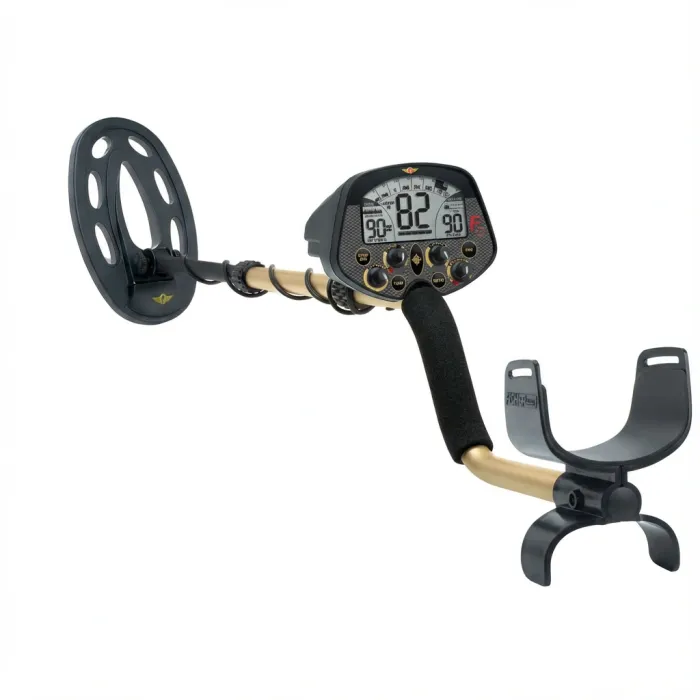
I've spent significant time testing the Fisher F5 across various UK terrains to see if it truly lives up to its reputation. While its blend of analog knobs and digital displays offers a unique level of control, I found that performance isn't just about the specs on paper.
There’s one specific aspect of its ground tracking that might change how you approach your next hunt.

Fisher F5
As an Amazon Associate we earn from qualifying purchases.
My Final Thoughts
The Good
- ●Lightweight design allows for all-day hunting comfort.
- ●Physical knobs provide instant and easy adjustments.
- ●Fast recovery speed finds targets in trashy soil.
- ●Long battery life reduces your long-term costs.
The Bad
- ●Not waterproof and requires protection from rain.
- ●Lacks modern simultaneous multi-frequency technology.
- ●Target identification becomes unstable in wet salt.
- ●Manual ground balancing requires a learning curve.
Fisher F5 Unboxing & Initial Setup: 8/10
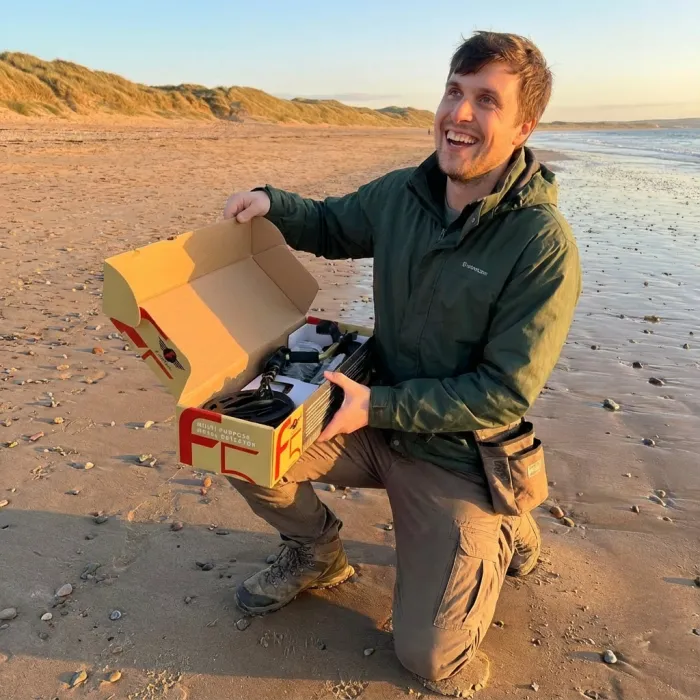
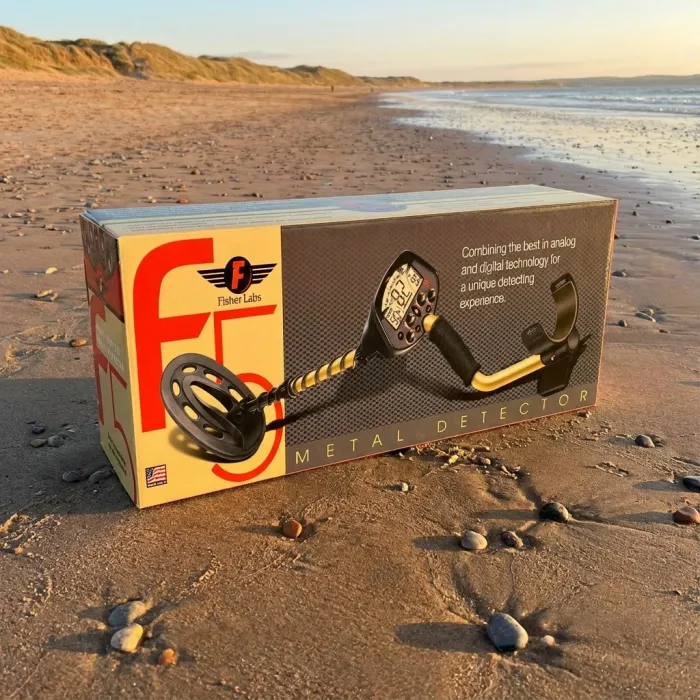
Opening the box reveals a well-organized kit centered on the Fisher F5 control box and S-rod assembly, typically paired with a 10-inch elliptical concentric open-center coil and a detailed manual. You’ll also find the necessary coil hardware, an armrest, and a five-year warranty card. Many dealers bundle an extra 4-inch concentric coil, which I find incredibly useful for trashy sites.
To get started, I simply pop in two 9V alkaline batteries. These provide roughly 40 hours of runtime, so you won't need expensive proprietary power packs. While there isn't a "turn on and go" automatic mode, the setup remains intuitive. I use the factory presets and the "phase lock" grab feature to balance the ground quickly. The large LCD clearly labels buttons for notched discrimination and frequency shifts. By adjusting the tactile gain and threshold knobs, I can fine-tune the interface before my first swing.
Fisher F5 Design, Build Quality & Ergonomics: 8/10
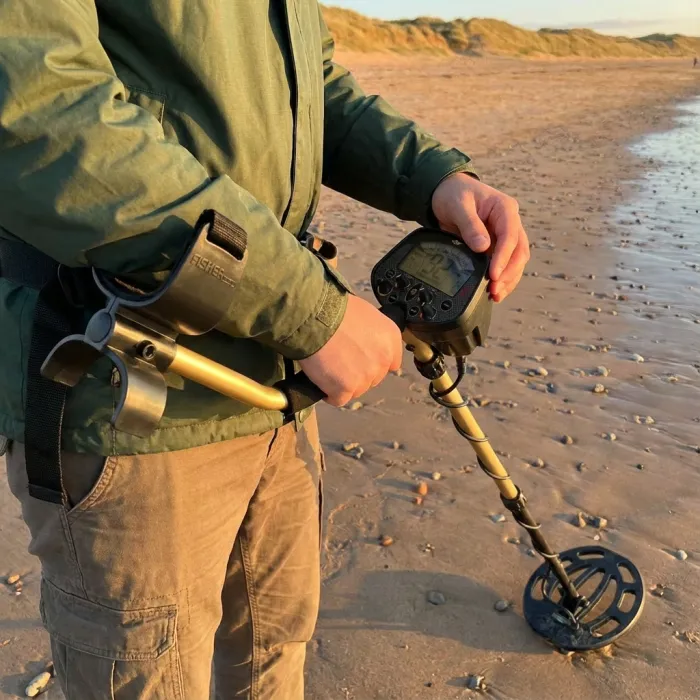
Once the machine is powered up and dialed in, the physical handling of the unit becomes the primary focus. I find the classic gold-and-black S-rod platform remarkably reliable. It provides a balanced feel that many modern machines struggle to replicate. Weighing in at approximately 3 lbs, it’s light enough for me to swing all day without suffering from arm fatigue. This portability makes it a top choice for long sessions in expansive fields.
The build quality feels solid, though the plastic construction of the control box reminds me this is a mid-range tool rather than a ruggedized professional unit. It isn't waterproof, so I’m always careful to avoid heavy rain. However, the ergonomics of the interface are superb. I love the tactile response of the physical knobs; they allow me to make instant adjustments while wearing gloves. The large, clear LCD ensures I never struggle to read data in bright sunlight.
Fisher F5 Key Features & Technology: 8/10
Four core pillars define the F5’s internal engine: its 7.8 kHz VLF frequency, a sophisticated visual ID system, high-resolution ground tracking, and a unique hybrid interface. I find the 7.8 kHz frequency strikes a perfect balance for general purpose hunting, effectively hitting coins and relics without missing smaller targets. You’ll appreciate the 0–99 numeric Target ID and the confidence bar graph, which work together to reduce your guesswork before digging.
The technology really shines with its Ground Phase and Fe₃O₄ mineralization readouts. This data lets you monitor soil changes in real time. Unlike many digital-only machines, the F5 uses independent knobs for Gain and Threshold, giving you tactile, granular control over its sensitivity. I also value the "Frequency Shift" feature, which helps me tune out annoying electromagnetic interference from power lines. While it lacks modern multi-frequency tech, its refined single-frequency approach offers precision that many sophisticated detectors struggle to match.
Fisher F5 In‑the‑Field Performance Review: 7/10
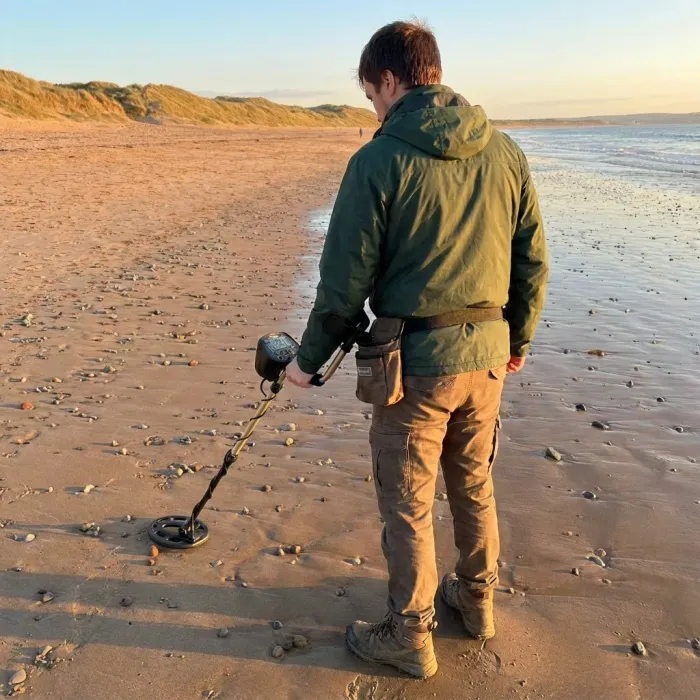
While the Fisher F5 isn't the newest tech on the block, its real-world speed on coins and relics in parks or fields still impresses me. I’ve found its rapid recovery time allows it to pluck keepers from iron-infested soil where slower machines might mask them. The 7.8 kHz frequency strikes a versatile balance, though it truly shines when I'm chasing silver dimes or copper artifacts.
I appreciate the continuous ground phase and Fe₃O₄ readouts; they let me monitor changing mineralization in real-time. This ensures I’m always tuned for maximum depth. However, it isn't perfect. In wet salt sand or extreme ground, the ID stability wobbles, and I've had to dial back the gain to stop the chatter. The stock 10-inch coil offers decent coverage, but I’d recommend a smaller coil for dense trash. For standard inland hunting, its snappy response and accurate pinpointing make it a reliable workhorse.

Fisher F5 User Experience & Learning Curve: 8/10
Although it's marketed as a professional-grade machine, you won't need a degree in engineering to master the Fisher F5. I've found that it strikes a perfect balance between sophisticated control and intuitive operation. Beginners can rely on factory presets and simple discrimination settings while they find their feet. As your confidence grows, you'll naturally experiment with the independent gain and threshold knobs to fine-tune performance.
The interface is a standout feature for me. I love the clear 0–99 Target ID and the confidence bar graph, which provide instant visual feedback. You aren't stuck digging through frustrating digital menus; physical knobs offer tactile, real-time adjustments. While mastering the manual ground balance and balancing gain against chatter takes a few sessions, the learning process feels rewarding rather than punishing. It’s a hands-on experience that teaches you the fundamentals of detecting without the need for complex apps or Bluetooth syncing.
Fisher F5 Value For Money: 8/10
Since the Fisher F5 sits in that sweet spot between entry-level units and high-end professional machines, it offers a level of control that’s hard to beat at this price point. I find the inclusion of manual ground balance and independent threshold and gain knobs gives me pro-level tuning without the usual hefty price tag. You’re getting a versatile tool that handles coins, relics, and dry beach sand effectively.
The long-term costs stay low, too. It runs on two 9V batteries for about 40 hours, so I’m not constantly shelling out for replacements or expensive proprietary packs. While it lacks modern multi-frequency tech or waterproofing, the sheer amount of real-time ground data it provides for a mid-range investment is impressive. If you want a hands-on experience and deep customisation without spending a fortune, I believe this detector delivers genuine bang for your buck. It's a smart, economical choice.
The Breakdown
Final Verdict
Fisher F5 metal detector is best for coin and relic hunting in varied inland terrains. It suits ambitious hobbyists who prefer manual tuning over navigating complex digital menus.
As an Amazon Associate we earn from qualifying purchases.
Fisher F5 My Final Verdict: 8/10
The Fisher F5 stands as a reliable mid-range workhorse that successfully bridges the gap between simple operation and advanced custom tuning. I’ve found its tactile knobs and real-time ground data provide a level of control that’s rare at this price point. It’s a fantastic choice if you’re an ambitious beginner or an intermediate hunter focused on coins and relics in varied UK soils. While it lacks the simultaneous multi-frequency tech of newer rivals, its fast recovery speed and clear visual ID system keep it competitive in trashy parks and fields.
I appreciate the lightweight S-rod design for long sessions, though I’d recommend staying away from heavy rain since the control box isn't waterproof. If you want a hands-on experience without digging through endless digital menus, this machine delivers. It’s a proven, high-performance tool that rewards your willingness to learn its nuances with impressive depth and accuracy.
Author Profile
Piotr Lesniewski
"Digging up the past, one signal at a time."
Polish-born, Scotland-based, and obsessed with the beep. My passion began decades ago, exploring fields with my Dziadek (grandfather). Now, with over 10 years of digging under my belt, I'm here to share everything I've learned—unfiltered and unbiased—to help you unearth your own piece of history. No sales pitches, just real field experience.