Minelab Excalibur II Metal Detector Review UK

Written by Piotr Lesniewski
Detectorist • Scotland
As an Amazon Associate we earn commission from qualifying purchases. Read our full Affiliate Disclosure.
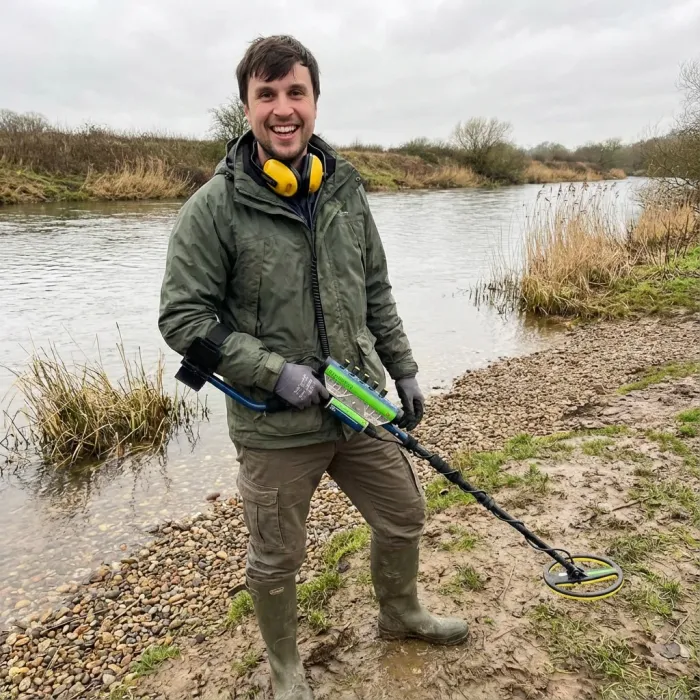
I've spent years scouring the UK's coastline, but few machines command as much respect as the Minelab Excalibur II. It’s a rugged beast built for the harshest saltwater environments, though its specialized design isn't without significant trade-offs.
I’ve thoroughly tested how its underwater tech translates to the field. Before you invest your hard-earned pounds, you’ll want to see how it handled the reality of the British surf.
Minelab Excalibur II
As an Amazon Associate we earn from qualifying purchases.
My Final Thoughts
The Good
- ●Excels in harsh saltwater and mineralized sand
- ●Finds deep jewelry other detectors miss
- ●Completely waterproof for diving up to 200 feet
- ●Rugged build lasts for decades of use
The Bad
- ●Extremely heavy weight causes significant arm fatigue
- ●Steep learning curve relies entirely on audio
- ●Dated ergonomics lack modern collapsible features
- ●Hard-wired components prevent easy part customization
Minelab Excalibur II Unboxing & Initial Setup: 8/10
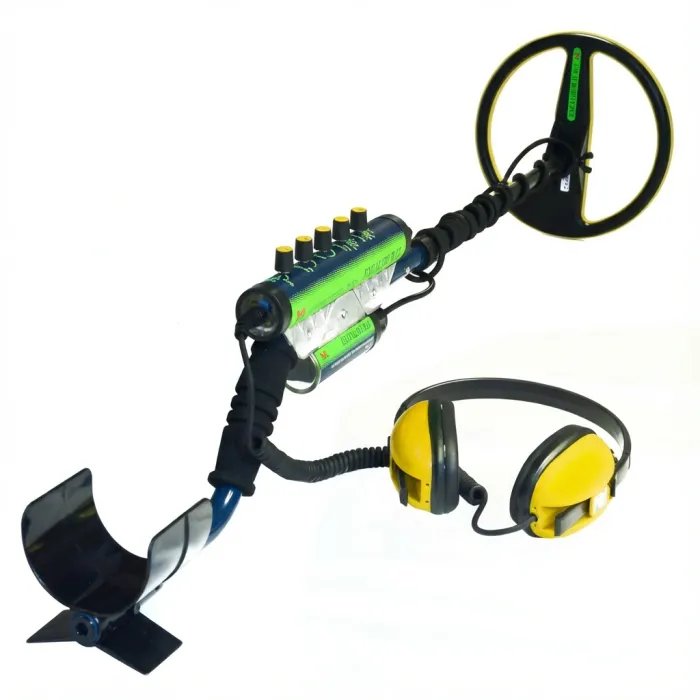
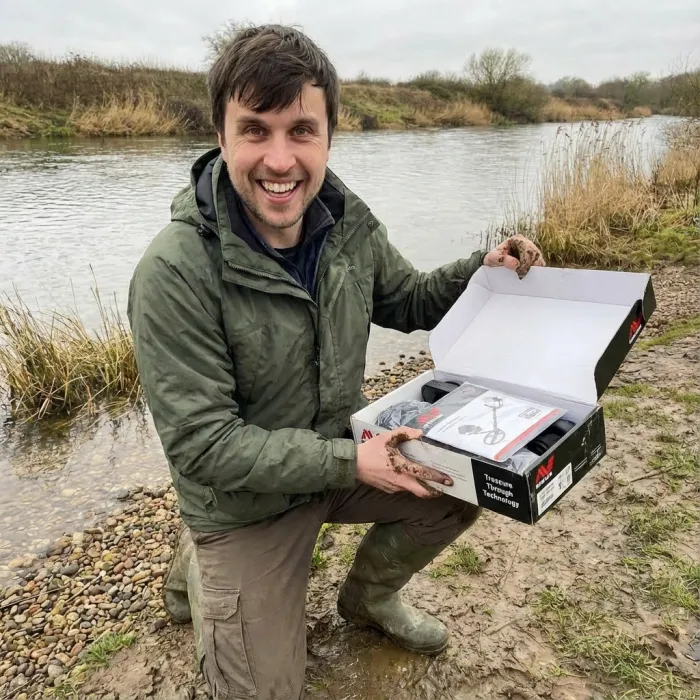
One look at the Minelab Excalibur II's heavy-duty packaging confirms you're getting a tool built for the abyss. As I pulled the components from the box, I didn't find a cluttered mess of flimsy extras—just the essentials for serious hunting. I immediately noticed the 10-inch Double-D slimline coil and the legendary Koss waterproof headphones, both hard-wired for maximum integrity.
Scaling the setup's quite easy; I simply attached the shaft, secured the armrest, and connected the NiMH battery pack. Minelab includes both a standard 48-inch shaft and a compact 36-inch dive shaft, which I find incredibly useful for switching between wading and wreck diving. While I'll admit the analog dials require some prior knowledge, the lack of complex menus means I was ready to hunt in minutes. After a quick charge via the universal mains, the system's ready for a massive nineteen hours of underwater exploration.
Minelab Excalibur II Design, Build Quality & Ergonomics: 7/10
Once the assembly's finished, the Excalibur II’s rugged IP68 build truly commands your attention. I’ve noticed its fluorescent high-vis bodywork stands out brilliantly in murky depths, while the reinforced skidplate and slimline coil feel indestructible against harsh saltwater. The rotary dials—controlling discrimination, sensitivity, volume, and threshold—are remarkably glove-friendly. I don't have to worry about menus fogging up or failing mid-dive.
However, I can't ignore the ergonomics. At 5.1 lbs, it’s a heavy beast. While the slim coil helps with balance, I find it causes significant arm fatigue during long beach sessions. The adjustable shafts offer some flexibility, but the fixed-length grips feel dated compared to modern, collapsible alternatives. It’s clearly a specialized tool designed for the abuse of dive environments rather than lightweight land trekking. Despite its hefty weight and bulky profile, I appreciate that its solid construction ensures it remains a dependable workhorse underwater.
Minelab Excalibur II Key Features & Technology: 9/10
Broad Band Spectrum (BBS) technology serves as the backbone of this machine, utilizing 17 simultaneous frequencies ranging from 1.5 kHz to 25.5 kHz to slice through saltwater and mineralized ground. I’ve found this multi-frequency approach essential for stability; it ignores the deceptive signals from wet sand that trip up single-frequency units. To boost clarity, Minelab’s Receive Coil Circuitry (RCB) amplifies faint signals directly inside the coil. This reduces electronic noise and helps me hear deep, whisper-thin targets.
I appreciate the automatic ground rejection, which transitions seamlessly between dry sand and the surf without constant fiddling. The 17 levels of discrimination and multi-tone ID let me ignore iron junk and focus on gold. While it lacks modern LCD screens or wireless apps, its specialized tech remains the gold standard for waterproof hunting. With a 200-foot depth rating and 19-hour battery life, it’s a powerhouse built for serious recovery.
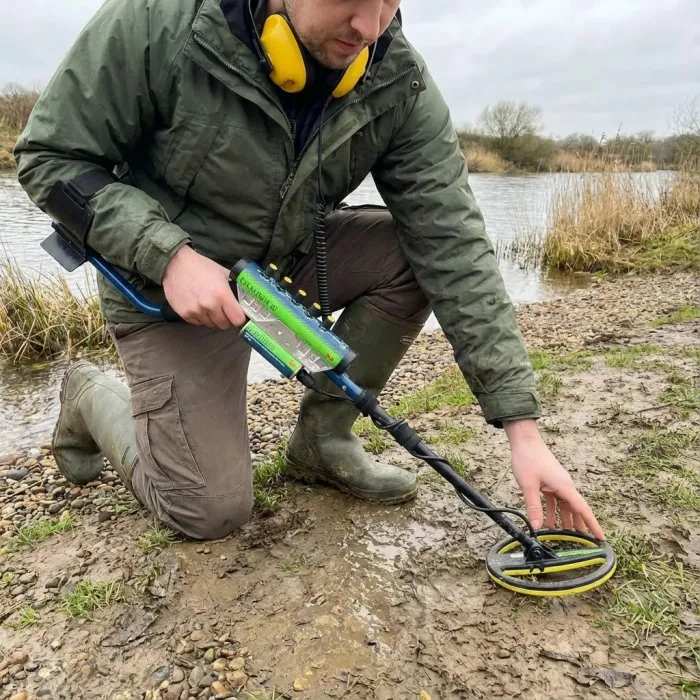
Minelab Excalibur II In-the-Field Performance Review: 9/10
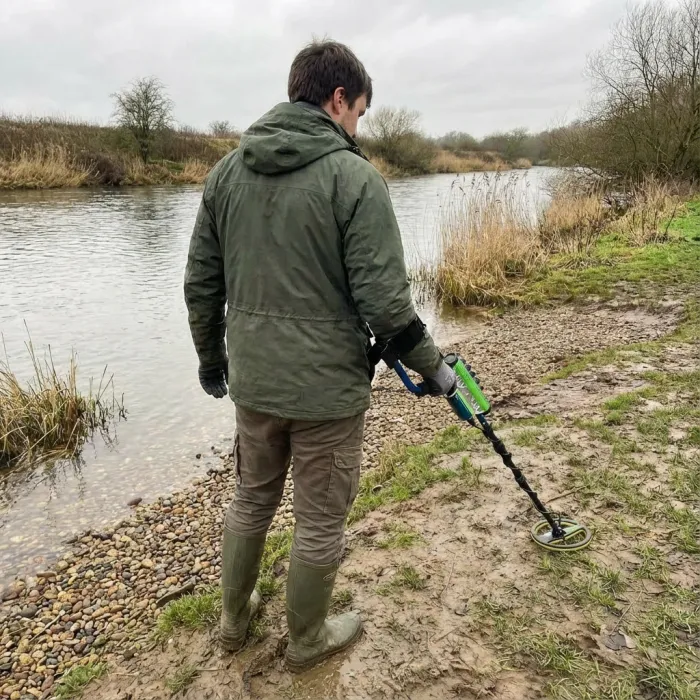
Many field tests confirm that this machine delivers exceptional depth and stability when I’m working through heavy saltwater and mineralized sand. The BBS technology handles high mineralization without constant retuning, allowing me to find rings and coins that other detectors simply miss.
When I move from dry sand into the surf, the automatic ground rejection ensures a seamless transition. I don’t deal with the falsing typical of single-frequency machines, as the Excalibur II remains rock-solid in trashy zones.
The Receive Coil Bore (RCB) technology is a game-changer; it amplifies faint signals, letting me hear deep targets clearly. During underwater wreck hunts, the dedicated dive shaft makes the unit manageable at depth. Using the multi-tone ID, I quickly distinguish valuable jewelry from iron junk before I even start digging. While it struggles with tiny, low-conductive land targets, its performance in the surf and sand is truly unmatched.
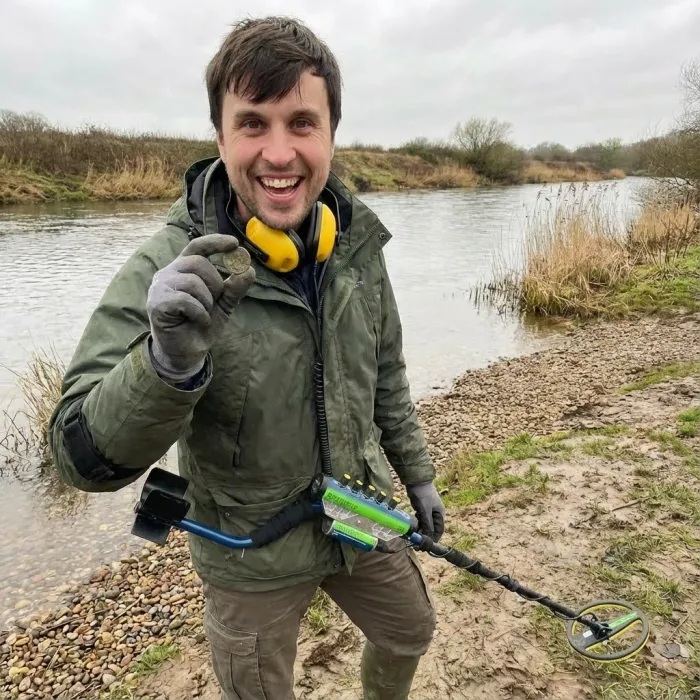
Minelab Excalibur II User Experience & Learning Curve: 6/10
While the machine’s field performance is legendary, mastering its interface requires plenty of patience and a steady hand. I’ve found that the lack of a digital screen means you’re relying entirely on your ears. Deciphering the multi-tone ID system takes significant practice; you aren't just listening for a beep, but interpreting subtle audio nuances amidst the constant background threshold. This steep learning curve often frustrates beginners who expect "switch-on-and-go" simplicity.
I appreciate the chunky, glove-friendly analog dials for underwater use, but they demand precise manual adjustments. You’ll spend hours fine-tuning the sensitivity and threshold to suit specific beach conditions. While veterans love this "workhorse" feel, the weight of 5.1 lbs quickly leads to arm fatigue, further complicating the experience for casual hunters. It’s a specialized tool that rewards dedication, yet its dated ergonomic profile and complex audio feedback make it a challenging starting point for newcomers.
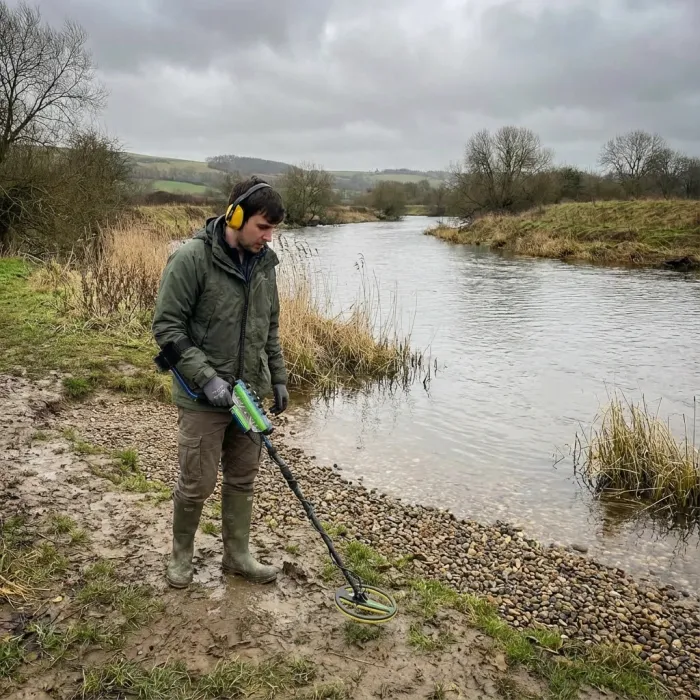
Minelab Excalibur II Value For Money: 7/10
Priced at approximately $1,600, the Minelab Excalibur II represents a significant financial commitment, yet its niche performance justifies the investment for serious underwater hunters.
I find the value proposition here rests entirely on your intended environment. You aren't just buying a machine; you’re paying for a specialized tool that includes everything you need—like waterproof headphones and a rechargeable battery—to start hunting immediately. Its ability to thrive in harsh saltwater conditions where cheaper detectors fail provides a clear return on investment if you’re chasing gold rings.
However, I can’t ignore that this tech feels dated compared to modern multi-frequency alternatives that cost less and offer more versatility. If you strictly hunt land, this is a poor use of your budget. But for dedicated divers needing reliable depth at 200 feet, its longevity and ruggedness defend the price tag. It’s a workhorse that lasts decades, making the cost-per-year surprisingly reasonable.
The Breakdown
Final Verdict
Minelab Excalibur II metal detector is best for dedicated divers and professional beach hunters. It is a specialized workhorse built to find gold in difficult underwater environments where standard machines fail.
As an Amazon Associate we earn from qualifying purchases.
Minelab Excalibur II My Final Verdict: 8/10
Although the Minelab Excalibur II has been on the market for nearly two decades, I still consider it an iconic beast that dominates saltwater and deep-water hunts. Its BBS multi-frequency technology remains the gold standard for cutting through mineralised sand and finding deep jewelry that other machines simply miss. While I’ll admit the 5.1 lbs weight feels heavy during long beach sessions, the rugged build is practically bulletproof down to 200 feet.
I'm giving it an 8/10 because it's a specialised workhorse, not a versatile all-rounder. If you want lightweight features or digital screens, look elsewhere. However, if your goal is uncovering gold rings in trashy surf zones, this machine’s performance justifies every penny. It’s not beginner-friendly, and the hard-wired components limit customisation, but its reliability is legendary. For serious divers and dedicated beach hunters, I’m confident the Excalibur II is still the king of the abyss.
Author Profile
Piotr Lesniewski
"Digging up the past, one signal at a time."
Polish-born, Scotland-based, and obsessed with the beep. My passion began decades ago, exploring fields with my Dziadek (grandfather). Now, with over 10 years of digging under my belt, I'm here to share everything I've learned—unfiltered and unbiased—to help you unearth your own piece of history. No sales pitches, just real field experience.